

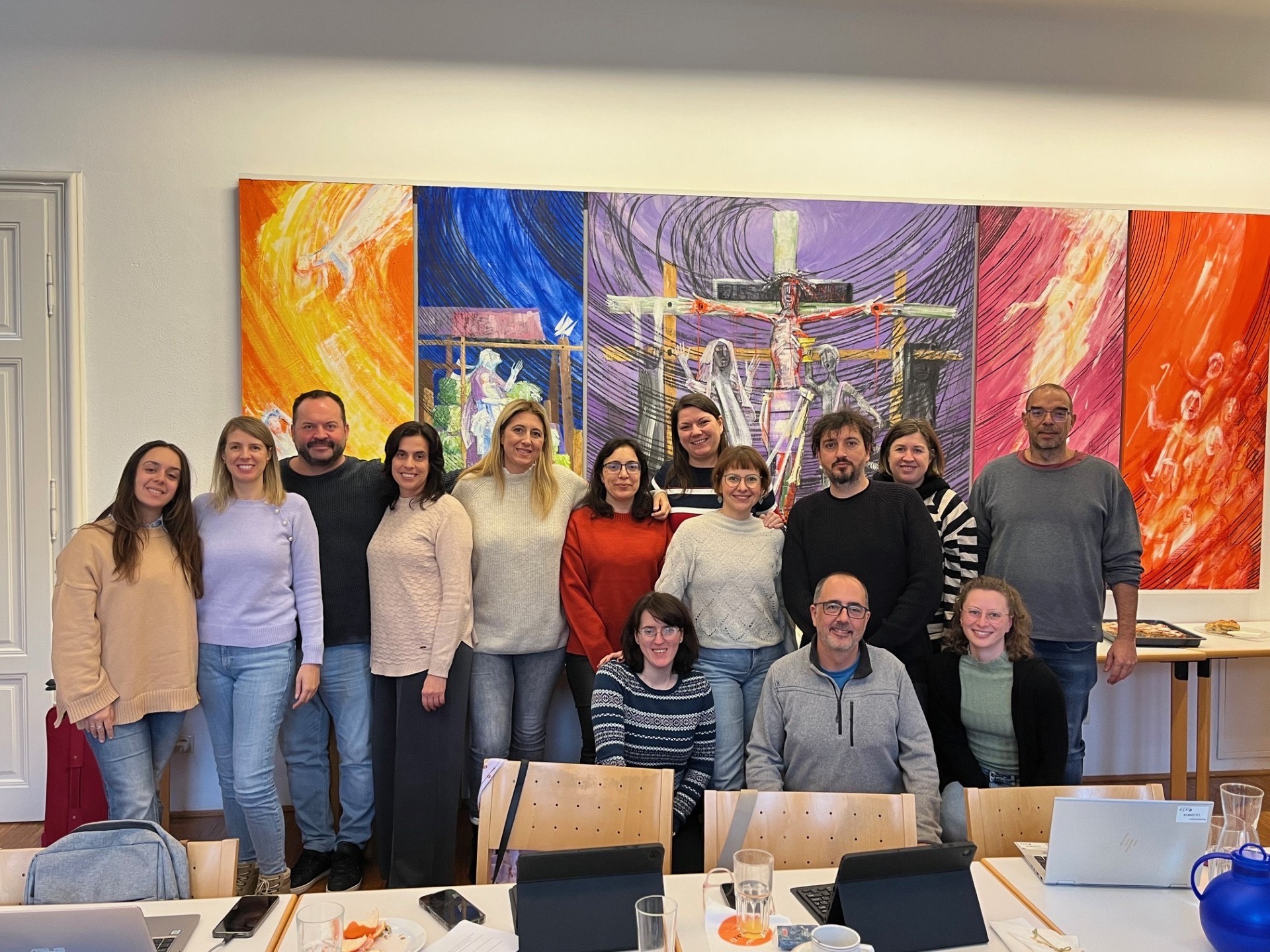
On November 25 and 26, 2025, the third international meeting of the PUENTE project took place in Linz, Austria. The primary objectives of the PUENTE Project are to support the social and labor integration of Ukrainian refugees through non-formal education, while providing educators with the tools and knowledge they need to assist in the integration process.
Representatives from all partner organizations—coming from Italy, Poland, Portugal, Spain, and Austria—gathered to discuss the project’s progress and the next steps. Several key topics were addressed during the meeting, and significant advancements were made in various areas of the project.
Advancements in the design of the PUENTE Course for adult educators
The first major topic of discussion was the design of the PUENTE course for adult educators. Partners worked together to review and propose improvements in course content, structure, and its accessibility through an online repository. The goal is to ensure that the course meets the specific needs of educators working with Ukrainian refugees.
Additionally, the partners discussed the creation of a compendium of best practices, which will serve as a guide to provide educators with valuable strategies and insights to improve their work with refugees. These updates are aimed at enhancing the effectiveness of the course, ensuring it offers practical tools to help educators navigate the challenges of refugee education.
Preparation of the pilot courses for 2026
Another key focus of the meeting was the preparation for the pilot courses that will be conducted within the project. These pilot courses are scheduled to take place in 2026, and each partner country will host its own set of courses. The partners worked on finalizing the calendarization of these courses, ensuring that each organization is aligned on the timeline and logistics for the pilot phase.
In addition, the format of the courses and the selection process for participants were discussed in detail. These pilot courses will serve as a crucial step in testing the course materials and evaluating the pedagogical approach before the full-scale implementation of the training program.
Review of the Manual for Promoting the European Way of Life
A key part of the PUENTE project involves promoting the European way of life—a set of values related to cultural diversity, inclusion, and respect for human rights. During the meeting, the partners reviewed the manual that will be used to guide educators in promoting these values among refugees. This manual is a vital component of the project, as it helps create an inclusive and welcoming environment for refugees, empowering them to actively participate in their new communities.
Update on dissemination and communication efforts
The meeting also included an update on the dissemination and communication efforts of the project. Partners discussed the progress made in raising awareness about PUENTE and its goals, particularly through social media and other communication channels. Strategies to increase the project’s visibility, engage new stakeholders, and share success stories were explored to ensure that the impact of the project reaches a wider audience.
Lastly, the partners reviewed and scheduled the tasks for each organization involved in the project. The goal was to ensure that each partner understands their specific responsibilities and the timelines for completing their activities. This collaborative effort is essential to maintain alignment among all partners and ensure the smooth execution of the project’s objectives.
The Linz meeting was a productive session that allowed all partners to collaborate closely on refining key elements of the PUENTE project. With significant progress made in course design, pilot course planning, and the promotion of European values, the project is well on its way to achieving its goals of supporting the integration of Ukrainian refugees through non-formal education. The next steps will involve finalizing the course materials, conducting the pilot courses in 2026, and continuing to promote the project’s work through strategic communication efforts.
Leave a Reply