

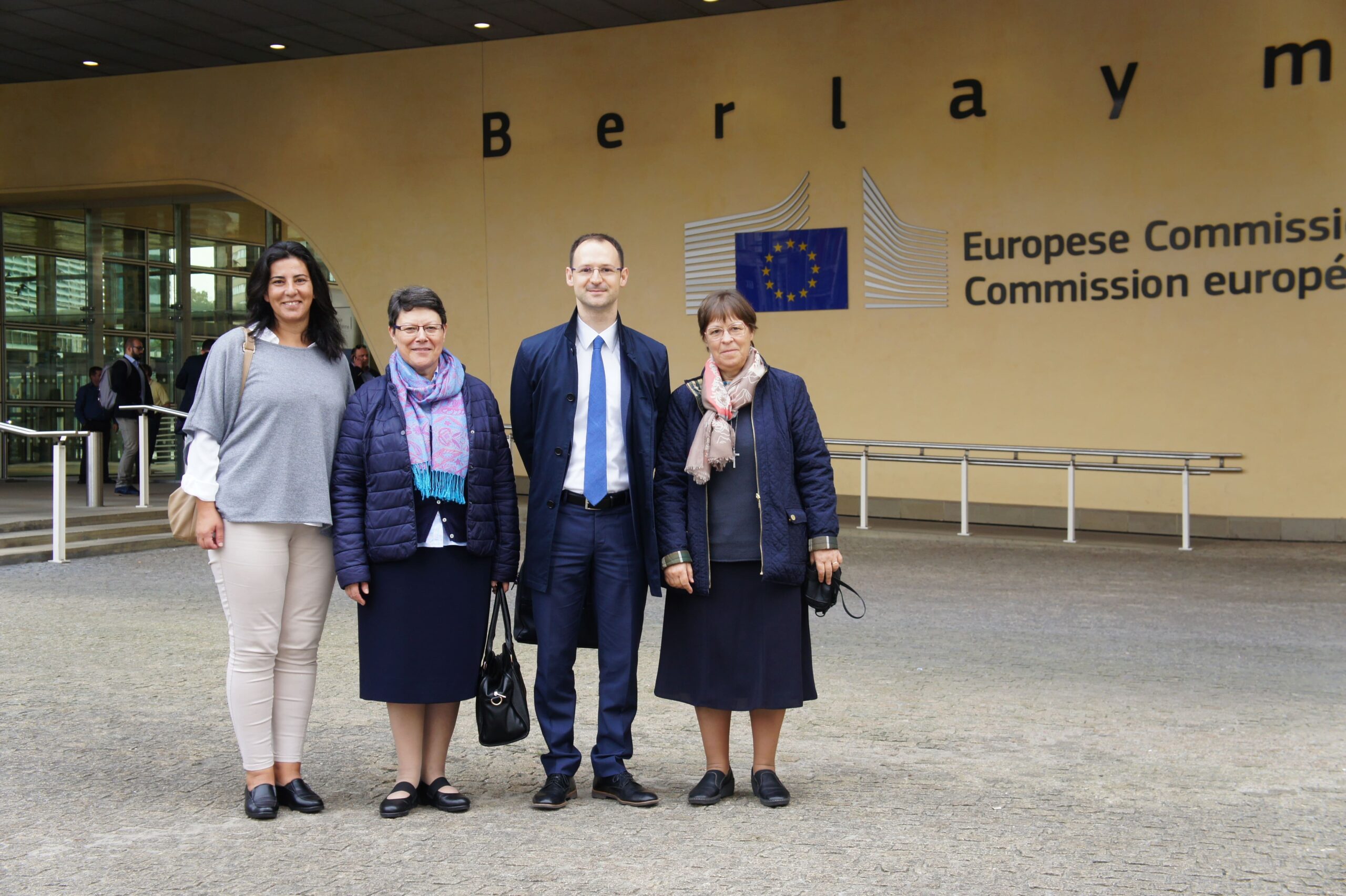
By Carlo Galasso, EU affairs manager in Hospitality Europe and member of PUENTE Project
Since the invasion of Ukraine in February 2022, Europe has faced one of the largest displacement crises of recent decades. An estimated 5.7 million people from Ukraine have sought refuge abroad, with the majority residing in European countries. Of these, approximately 4.33 million people had temporary protection status in the European Union as of November 2025, allowing them to live, work and access services such as education in host countries.
This context underscores the urgency of moving beyond isolated national responses. From my experience connecting local practices with broader European frameworks and networks, I believe that a European approach to non‑formal education for refugees is essential. The mobility of displaced people within the continent and the diversity of national systems require coherence and shared standards to ensure consistent access to quality learning and inclusion opportunities across borders.
PUENTE Project’s Multidimensional contribution to inclusion
The PUENTE Project (Protecting Ukrainians Encouraging Non‑formal Training and Education) has highlighted the value of multidimensional approaches to inclusion that integrate not only education, but also psychosocial support, intercultural communication, and targeted training. Within this partnership of organisations from six European countries, the project has focused on creating non‑formal training pathways that address both educational needs and psychological well‑being for adult refugees.
A participatory diagnosis carried out under PUENTE revealed that 47 % of Ukrainian refugees reported not receiving clear information upon arrival in their host country, which significantly affects their ability to access housing, psychological support, healthcare, and language services — all key elements for meaningful inclusion.
This project brings added value by enabling transferable methodologies and shared standards across countries with diverse levels of preparedness and expertise. Some partners contribute deep experience in adult education and pedagogical design, while others bring strengths in mental health support and trauma‑informed care, helping frontline professionals better support individuals who have experienced loss, instability or separation. Other partners specialise in inclusive practices and accessibility for persons with disabilities, ensuring that training, information and community engagement are available to all.
This diversity of expertise allows the consortium to enrich its work beyond technical training modules, embedding psychosocial resilience, accessibility and social empowerment into educational strategies. It also enables shared learning: countries with well‑developed support structures — for example in psychosocial care or inclusive services — can transfer those practices to partners where such systems are still evolving.
Addressing barriers: information and psychosocial support
The evidence emerging from the PUENTE participatory diagnosis also highlights critical barriers to inclusion beyond formal education structures. Almost half of respondents lacked essential information about key services upon arrival — 20 % lacked information on housing, 16 % on psychosocial support, 14 % on healthcare, and 13 % on language services.
These gaps not only complicate refugees’ ability to navigate their new environments, but also hinder their broader inclusion in host societies. Addressing these barriers requires integrated training for professionals — including skills in intercultural communication and trauma‑informed psychosocial support — which the PUENTE Project has identified as high‑demand areas for capacity building among practitioners.
Non‑formal education, in this sense, becomes a bridge not only to learning in the strict sense, but also to information accessibility, community engagement, and emotional resilience, which are essential for anyone rebuilding their life after forced displacement.
Challenges and collaborative solutions across diverse contexts
Working across multiple cultural, linguistic and institutional contexts is both enriching and complex. In my role at Hospitality Europe, I have supported partners in managing differences constructively, transforming potential obstacles into opportunities for deeper mutual learning.
PUENTE Project’s collaborative and intercultural approach to communication and training enables partners from eight organisations across six countries to work together effectively without losing their local identities. This balance between shared goals and respect for local diversity is vital in strengthening inclusive practices that respond to the real needs of displaced people.
Strengthening institutional collaboration
Projects like PUENTE Project play an important role in informing European policymaking by offering evidence‑based insights from field experience. The data and tools generated through cross‑border cooperation — including concrete training modules for educators and carers — provide practical knowledge that can support more coherent and inclusive policy frameworks at the European level.
By connecting educators, NGOs, public bodies, and civil society actors, PUENTE Project contributes to building networks that enhance institutional collaboration and shared understanding across sectors. This helps ensure that policy responses to displacement and inclusion are grounded in lived realities and informed by diverse perspectives.
Towards sustainable inclusion
The inclusion of refugees is not a linear or uniform process. It requires cooperation that combines expertise across education, psychosocial support, accessibility and community development. Non‑formal education, when structured through European collaboration, becomes a tool for empowering individuals and strengthening social cohesion.
The PUENTE Project demonstrates that by embracing a holistic, shared approach to educational pathways and support systems, we can enhance both the quality and equity of inclusion across Europe. This work contributes not only to individual empowerment but also to building resilient and inclusive communities rooted in shared values of dignity and human rights.
Carlo Galasso
EU affairs manager in Hospitality Europe and member of PUENTE Project
Leave a Reply