

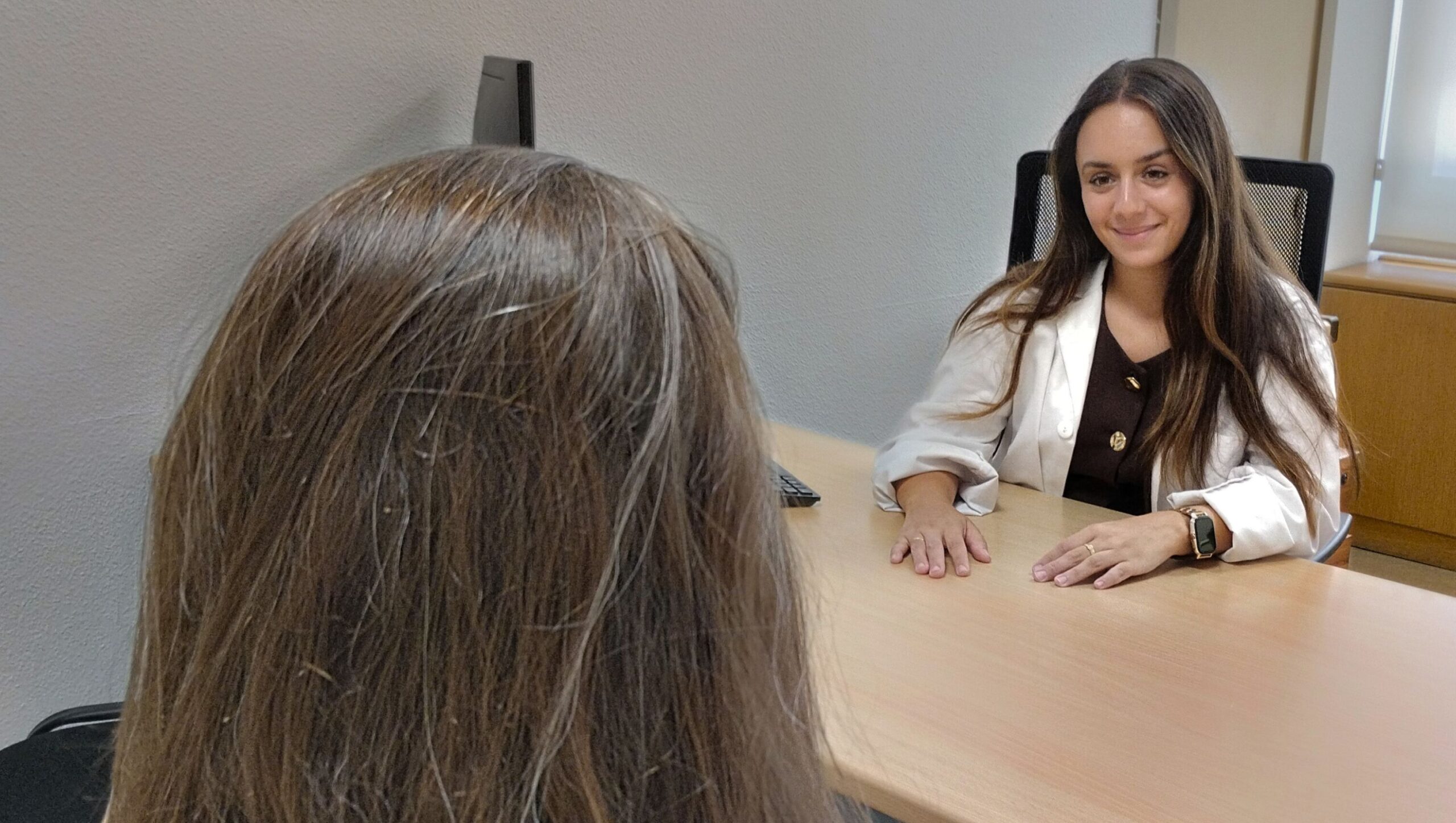
By Sheila García de la Galana Tapia, Clinical Psychology Resident at the San Juan de Dios Center in Ciempozuelos and member of the PUENTE Project
Adults who have experienced armed conflict or forced displacement do not arrive with material needs alone. What they express—and often what they keep silent about—goes beyond what is visible.
As Sheila García de la Galana explains, at first these individuals tend to focus on issues such as employment or housing. However, emotional needs also emerge strongly: the desire to be heard, feelings of loss, or uncertainty about the future.
This observation aligns with the recent PUENTE Project study on barriers to the inclusion of Ukrainian refugees, which revealed that 15% of respondents identified the lack of psychological support as a significant obstacle to their integration, alongside the absence of clear information. Faced with this reality, Sheila emphasizes:
“Many of these reactions are expected human responses to situations with a high emotional impact, and should not automatically be interpreted as signs of mental disorder.”
Psychological Distress: Understanding, Not Labeling
Sheila stresses the importance of avoiding pathologizing approaches. In contexts of vulnerability, she argues that it is more accurate to speak of psychological distress rather than disorders:
“Some of the most common difficulties include persistent feelings of rootlessness, hopelessness, trouble concentrating, or general demotivation.”
In her experience, Sheila also points to feelings of identity loss, worthlessness, and fear of the future. However, she notes that such reactions are understandable in adults under high emotional and social strain. Therefore, interventions should focus on rebuilding meaning and offering respectful support:
“These expressions of distress […] require careful and respectful intervention, free of judgment, that helps people rebuild a coherent and meaningful narrative about their experience.”
Mental Health as a Driver of Transformation
Reconstruction is not only material—it is also emotional. For many adult refugees, regaining self-confidence and resuming their education or training also means healing. Sheila sums it up this way:
“Mental health care, understood from a non-pathologizing and strengths-based perspective, can become a transformative resource.”
Through this approach, decision-making is strengthened, trauma is processed, and a sense of control over one’s life is restored. While the PUENTE Project does not provide direct psychological care, it works with those who do: it trains, raises awareness, and transforms the practices of educators, psychologists, and social workers.
In this way, the impact is amplified: each trained professional multiplies the reach of humanized intervention.
Social and Emotional Support: The Foundation of Reconstruction
Beyond the individual level, Sheila highlights that adult refugees face profound relational ruptures:
“They do not only face the individual effects of experiences of rupture, loss, or violence, but also drastic changes in their relationships, support networks, and living conditions.”
These changes directly affect their ability to envision a future. That is why social and emotional support becomes a determining factor.
In this regard, the PUENTE Project proposes a non-formal education training model that does not work directly with refugees, but rather with professionals in the educational and psychosocial fields, to strengthen their ability to respond.
“PUENTE Project can help professionals working with refugees to develop greater sensitivity and enhance their capacity to provide individualized support.”
Inclusion Pathways
According to our specialist, any inclusion process must recognize that each refugee arrives with a unique life path. She argues that a successful pathway must be comprehensive, flexible, and centered on the human dimension.
This means addressing both tangible and emotional needs. She also notes that support should not be limited to resource access but must take into account the emotional experiences of the migration process. In her own words:
“It is essential that training and technical teams are aware of psychosocial and cultural aspects […] and that support takes into account the emotional experiences associated with the migration process.”
Within this framework, the PUENTE Project becomes a vehicle for change, advocating for a model that values mental health as a key pillar for the social and labor inclusion of Ukrainian refugees.
Leave a Reply