

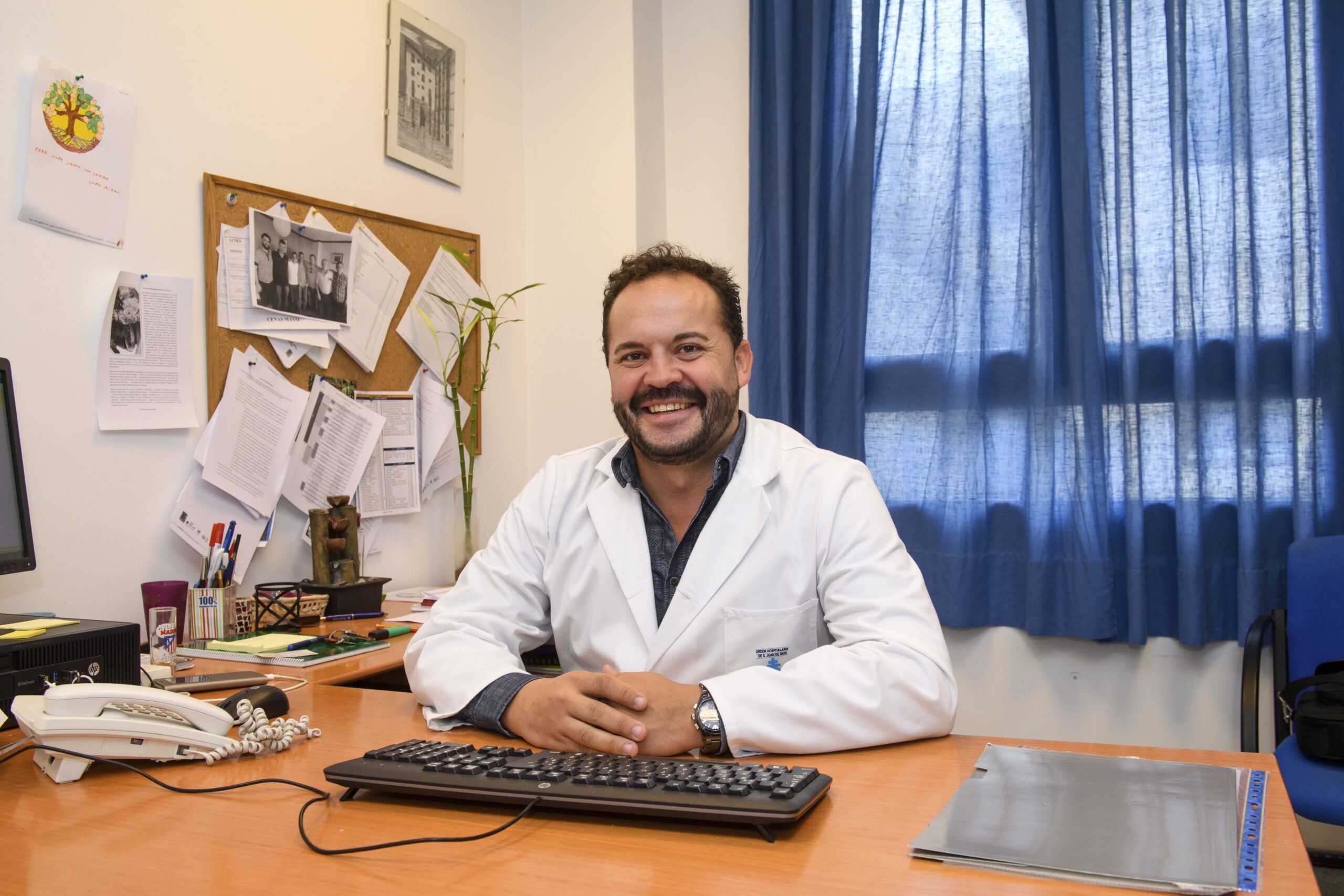
By Juan Jesús Muñoz, mental health coordinator at the San Juan de Dios Center in Ciempozuelos and member of the PUENTE Project team.
Mental health and psychological care are fundamental when speaking about the inclusion of people in situations of great vulnerability, especially those who have experienced forced displacement. From my own experience, I have observed the deep and lasting consequences of such situations.
Psychological challenges of adults in situations of high vulnerability
From a clinical perspective, when working with adults who have lived through forced displacement, it is common to encounter complex psychological difficulties that demand deep understanding. While post-traumatic stress disorder (PTSD) is a frequent diagnosis, those affected often experience complex post-traumatic stress disorder (C-PTSD). This disorder not only involves re-experiencing and avoiding traumatic memories, but also persistent difficulties in emotional regulation, self-image, and the ability to establish trusting relationships.
Forcibly displaced people often suffer multiple losses: loved ones, their home, their community, their professional role, and their social network. This can lead to a profound identity void, expressed as uprootedness, uselessness, and even survivor’s guilt. Chronic uncertainty erodes clarity of thought, decision-making, and motivation. In many cases, pre-existing mental health issues are reactivated or worsened in the new environment.
In short, the suffering of refugees and displaced persons is multidimensional, and addressing it requires clinical, social, and cultural strategies. For this reason, psychological support becomes an essential tool to restore emotional stability and lay the foundations for genuine inclusion.
Mental health care as a driver of motivation and confidence
Psychological care is, without a doubt, a fundamental requirement for displaced people to regain the motivation and confidence needed to rebuild their lives. When someone is trapped in deep emotional pain, it is difficult to envision a future of development, learning, and prosperity.
Therapeutic work seeks to restore a sense of internal safety, reinforce self-esteem, and rebuild a sense of life continuity. The aim is to help displaced people recover the belief that they still have something to offer and can build a future. This restoration of hope is achieved through constant support, validation of emotions, and the creation of a safe space.
The process of regaining motivation to resume training or find employment opportunities requires time and support. Psychological intervention acts as a catalyst for resilience, helping people to reframe traumatic experiences and fostering trust in themselves and in others.
In this context, the PUENTE Project plays a fundamental role, integrating training, social inclusion, and mental health as a cross-cutting pillar. Its value lies in training professionals from different sectors to detect and understand the impact of trauma, ensuring that refugees do not face emotional barriers alone.
The role of psychological care in training and inclusion processes
In initiatives such as the PUENTE Project, the integration of psychological care is central to inclusion. It provides refugees with a safe space to work through emotional pain, understand their experiences, and recover resilience resources.
At the same time, it equips educational and social teams to interpret behaviors that could otherwise be misunderstood: absenteeism, difficulties concentrating, or relationship problems are not signs of disinterest but expressions of deep suffering that require empathy and understanding.
Furthermore, psychology contributes to creating safe and inclusive environments, where cultural differences and the marks of trauma do not become insurmountable barriers. This significantly improves the long-term chances of educational and employment integration.
Ultimately, PUENTE Project strengthen both refugees and the professional and community networks that welcome them, promoting empathy, prevention, and genuine inclusion.
To complement this information on the impact of mental health on refugees and how it affects their inclusion in society, you can review the recent study on Ukrainian refugees in Europe, which addresses the lack of information and psychological support as key barriers to their inclusion.
Leave a Reply