

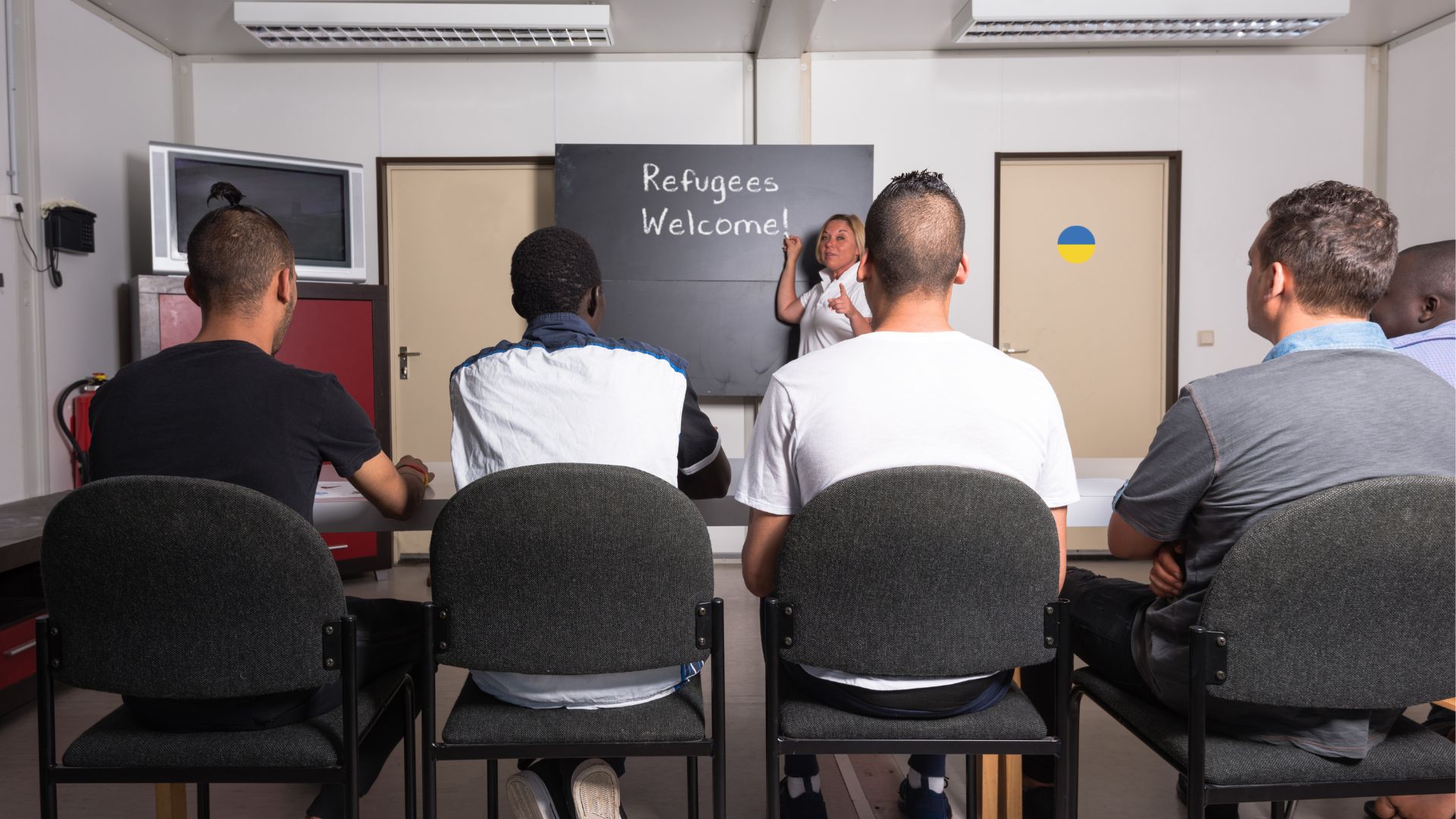
PUENTE Project, funded by the Erasmus+ program, has made significant progress in its first year of implementation, positioning itself as a key initiative in non-formal education & training and supporting educators and social caregivers working with Ukrainian refugees in Europe. The project’s main goal is to support the social and educational integration of refugees by providing professionals with the tools needed to address their complex psychosocial and educational needs.
Through an inclusive and holistic approach, PUENTE Project has made notable strides in creating innovative educational resources, training professionals, and establishing a collaborative European network. Below, we highlight the most important achievements of the project to date, analyzing the products developed, the methodologies implemented, and the impact they have had on the organizations and individuals involved.
A solid framework of international collaboration
Since its launch in September 2024, PUENTE Project has been implemented by a consortium of 8 organizations from different European countries. These entities have worked together to create training materials and launch dissemination activities. Fundación Juan Ciudad, as the project coordinator, has played a crucial role in overseeing the management and ensuring activities are completed according to the established quality standards with the collaboration of Centro San Juan de Dios de Ciempozuelos and Hermanas Hospitalarias Valladolid in Spain; Instituto São João de Deus in Portugal; Provincia Religiosa di San Pietro – Fatebenefratelli in Italy; Bonifraterska Fundacja Dobroczynna in Poland; Konventhospital Barmherzige Brüder Linz in Austria; and Hospitality Europe in Belgium.
The project has utilized digital platforms to establish an efficient collaborative ecosystem, enabling seamless communication between partners. Through these tools, nine online coordination meetings and two transnational meetings have been held. This communication system has been essential in ensuring all partners remain aligned with the project’s objectives and timelines, and in managing resources and tasks effectively.
The educator and caregiver training course
One of the standout achievements of PUENTE Project is the creation of the training course for educators and social caregivers. This course aims to equip professionals with the necessary knowledge and skills to address the psychosocial and educational needs of Ukrainian refugees. The course design is based on a comprehensive review of refugees’ needs and the best psychosocial intervention practices in crisis contexts.
To date, the consortium has completed the definition of learning objectives and the competency framework for the course. The content has been structured into modules covering a variety of topics, including inclusive teaching strategies and psychosocial intervention techniques. In practical terms, the course is being digitized so educators can access materials flexibly, regardless of their location.
The course will be available in different languages and has been designed in a modular format, allowing it to be adapted to different educational contexts. Interactive materials, such as videos, infographics, and self-assessment tools, are being incorporated to ensure a dynamic and accessible learning experience.
The Good Practices Compendium: a reference model
The Good Practices Compendium is another key product developed as part of the PUENTE Project. This compendium collects a series of successful strategies that have been implemented by organizations working with refugees, both within and outside the consortium. Its purpose is to provide educators with concrete examples of what has worked in similar situations, and to offer methodologies they can apply in their own work.
The compendium includes 12 good practices in the fields of education and psychosocial support. These practices feature innovative approaches that have proven effective in refugee integration, and each one is accompanied by a detailed description of its implementation and outcomes. This resource will be invaluable for educators looking to adapt their approaches to meet the needs of Ukrainian refugees and support their social and educational integration.
Surveys and feedback: driving continuous improvement
Throughout the project, stakeholder surveys have been conducted to gather feedback from both educators and refugees about the materials and activities developed. This consultation process has been essential in ensuring that the products created by the project adequately meet the needs of the beneficiaries, and for making timely adjustments.
The surveys have been a key part of the validation of the training modules and the Good Practices Compendium, allowing the materials to be reviewed and adjusted based on participants’ responses. Data collection has also been useful in identifying areas for improvement and strengthening the quality of the content provided.
The European Lifestyle Guide to facilitate refugee inclusion
Another highly anticipated product of the PUENTE Project is the European Lifestyle Guide. This resource is specifically designed for Ukrainian refugees, with the aim of facilitating their integration into host countries. The guide covers key topics such as labor rights, the education system, European values, and other essential aspects of life in Europe.
The first draft of the guide has been completed and is currently undergoing review and translation into the project’s various languages. The guide will not only provide valuable information about daily life in Europe, but will also include practical resources and testimonials from other refugees and educators who have undergone the same adaptation process.
Additionally, the guide will be complemented by interactive materials that will allow refugees to familiarize themselves with the content in a dynamic and accessible way. This guide will be a crucial tool to support refugees in their integration process and help them better understand and adapt to their new environment.
Impact on organizations and participants
The impact of the PUENTE Project has extended beyond the creation of educational products; it has also generated a strengthening of the participating organizations’ capacities. These organizations now have more robust tools and knowledge to manage educational and psychosocial programs for refugees, enabling them to improve the quality of care and support provided to Ukrainian refugees.
Educators and social caregivers who have participated in the project have enhanced their competencies, particularly in key areas such as psychosocial intervention, intercultural communication, and inclusive education. These competencies are not only essential for supporting refugees, but also improve educators’ ability to adapt to the challenges presented by crisis and forced displacement contexts.
Project visibility and future outlook
The dissemination of the project’s results has been another area where PUENTE has excelled. Through its official website and social media profiles, the project has reached a wide audience, surpassing thousands of visitors on its website and over 3,000 interactions on social media. This visibility has been crucial in generating growing interest in using the resources developed by PUENTE.
As the project progresses, it is expected that the products created—such as the training course, Good Practices Compendium, and European Lifestyle Guide—will be used by a broader community of educators and organizations across Europe. Additionally, the upcoming pilot phase of the training course will be a pivotal step in expanding PUENTE’s impact.
In conclusion, PUENTE Project has made remarkable progress in its first year, laying a solid foundation for the creation of educational and psychosocial resources that will help improve the integration of Ukrainian refugees in Europe. The products developed so far are only the beginning of a broader process that will impact thousands of refugees and professionals in the future.
Leave a Reply