

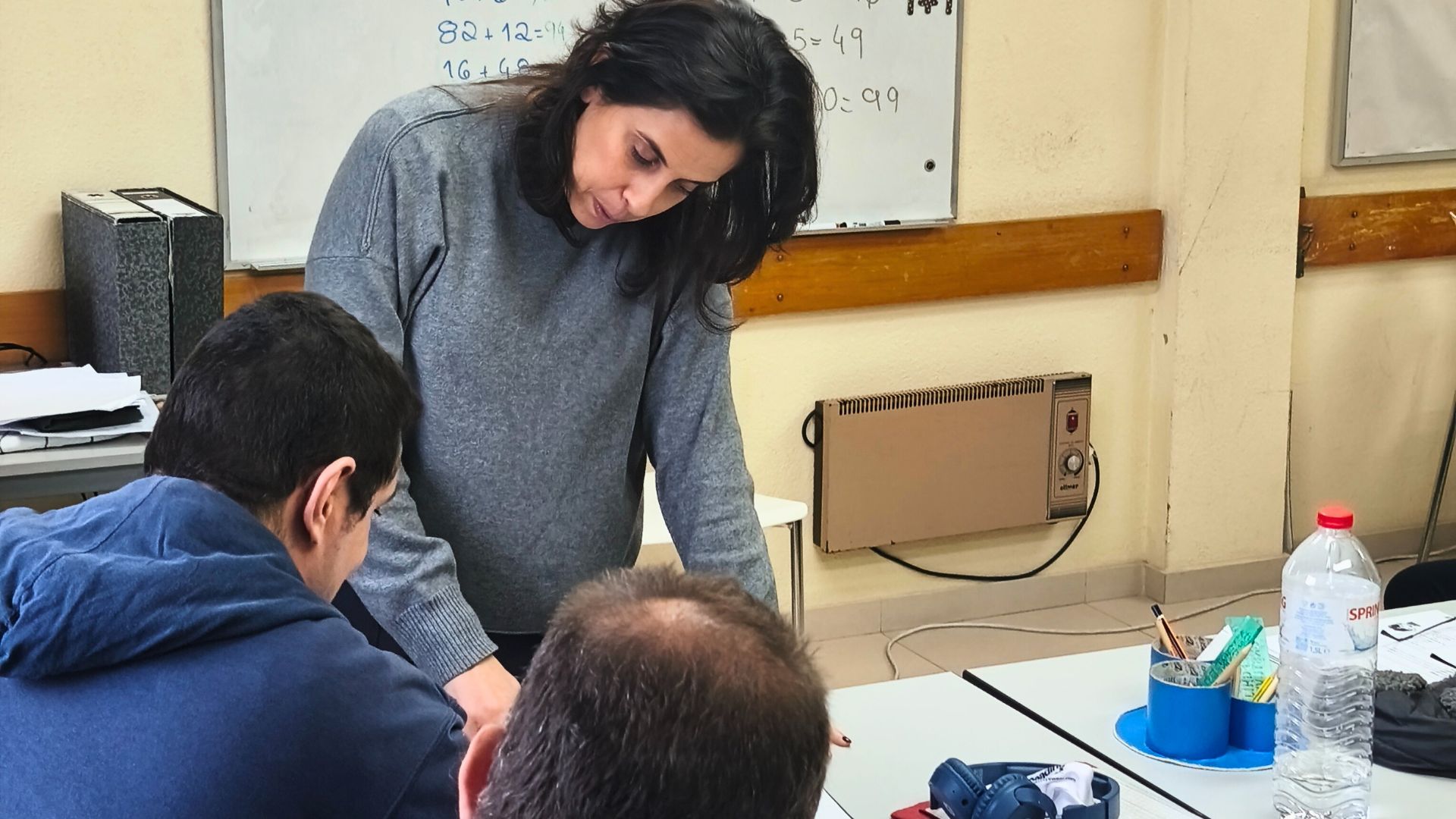
Within PUENTE Project, non-formal education is used as a bridge between emergency reception and long-term integration for adult Ukrainian refugees, linking learning, employability and autonomy. This approach is especially relevant in the framework of the International Day of Education, which emphasises education as a human right and a condition for peace and development.
Non-formal education and employability
In this context, non-formal education goes beyond traditional classroom teaching and is organised as flexible, learner-centred pathways that respond to refugees’ prior qualifications, current needs and future plans. Activities include language training linked to workplace communication, digital and transversal skills workshops, and group sessions on rights, services and labour market navigation. These formats help participants rebuild professional identity, articulate their competences and increase confidence to re-enter education, training or employment in the host country.
By validating competences gained through previous formal, non-formal and informal learning, non-formal education also mitigates the risk of de-qualification and underemployment that many Ukrainian refugees face on arrival. When learning offers clear connections to real job opportunities, apprenticeships or further training, it supports not only employability but also a sense of control over one’s own life project.
Barriers to training and work
Adult refugees commonly encounter structural and psychosocial barriers when accessing education and work, even when they bring high levels of qualification and experience. Typical obstacles include complex procedures for recognition of prior learning and foreign diplomas, language requirements that are difficult to meet in a short time, limited information about available programmes, and care responsibilities that restrict participation. Many also face psychological distress related to war, displacement and loss, which affects concentration, motivation and self-esteem.
PUENTE Project responds to these barriers through a holistic and equity-oriented framework that combines learning with social and psychological support. Partners co-design inclusive learning tools adapted to different languages, abilities and life trajectories, and create safe learning environments that acknowledge trauma and migration experiences rather than ignoring them. This integrated approach helps refugees to stay engaged in training, to trust institutions again and to see education as a realistic investment in their future.
Example of a learning activity
One representative example is a non-formal learning module that combines host-country language, digital literacy and career guidance in small groups of adult refugees. Sessions may take place in community or refugee centres and use project-based methods: participants work on concrete tasks such as preparing a CV adapted to local standards, practising job interviews, or exploring online platforms for training and employment.
Alongside technical content, the module develops transversal skills such as teamwork, communication, self-advocacy and problem-solving, which are essential for labour market integration across sectors. By the end, participants not only improve their language and digital skills, but also gain clearer career plans, peer support networks and greater confidence to approach employers, training providers or public services.
Lessons on education and long-term integration
Several lessons emerge from these experiences regarding the role of education in long-term social and labour market integration. First, education for refugees must be conceived as a continuum of lifelong learning opportunities, with smooth bridges between non-formal and formal systems and strong links to validation and recognition of prior learning. Second, employability-oriented programmes are most effective when they address language, skills, psychosocial wellbeing and rights awareness at the same time, rather than treating them as separate domains.
Third, inclusive and participatory pedagogies—like those promoted in the PUENTE Project—strengthen autonomy because they position refugees as active agents in designing their learning pathways.
Finally, the International Day of Education is a reminder that investing in non-formal education for displaced adults is not only an emergency response, but a long-term strategy for social cohesion, economic participation and peace.
Andreia Magalhães
Nurse Specialist in Mental Health and Psychiatry in Instituto S. João de Deus and PUENTE Project Team Member
Leave a Reply