

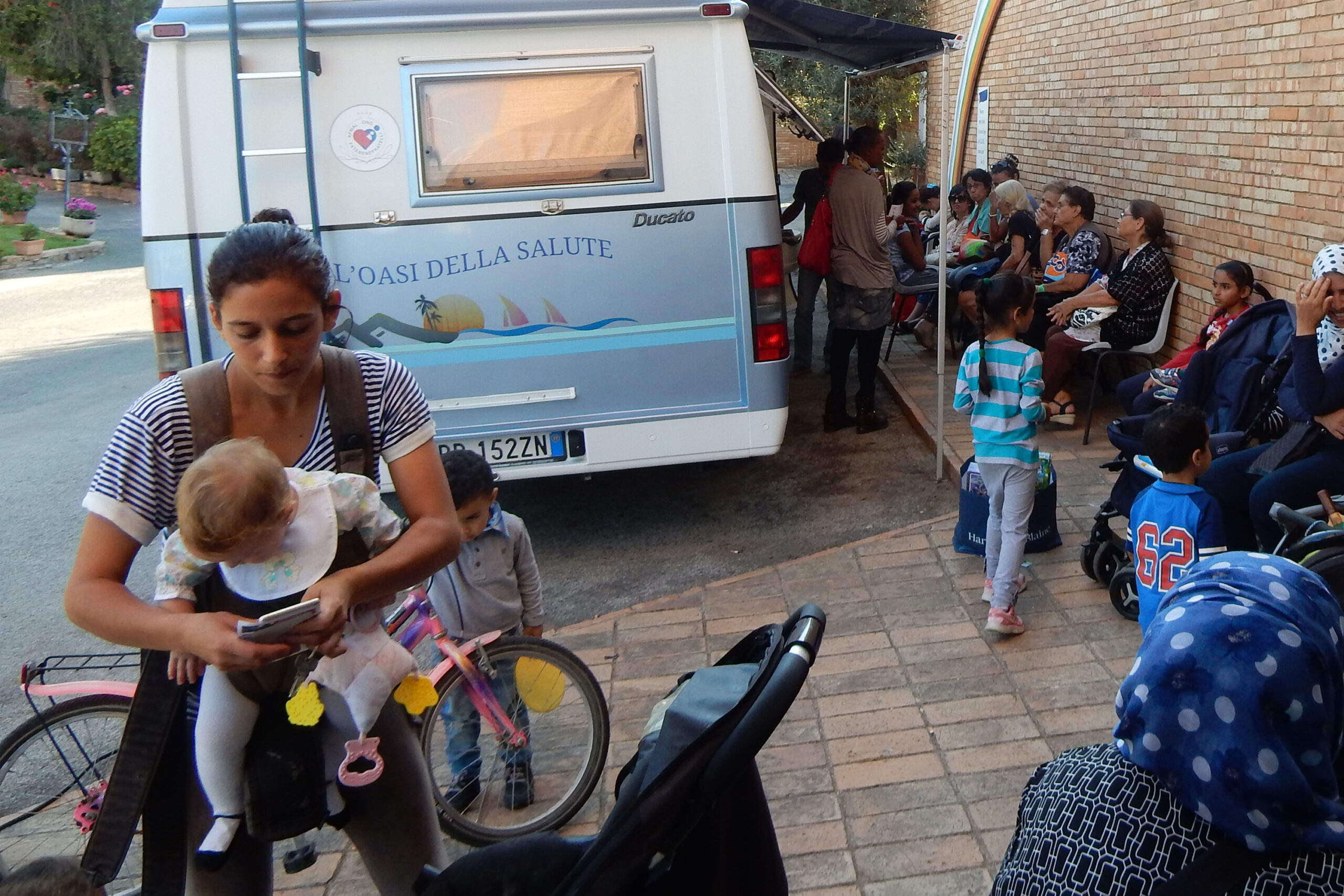
Across Europe, the arrival of people fleeing the war in Ukraine has reshaped conversations around inclusion, participation and social cohesion. Today, more than 4.3 million Ukrainian refugees benefit from temporary protection in the European Union, representing one of the most significant displacement movements in recent history. This population is characterised by a high level of education, yet also by structural challenges that limit full integration. According to UNHCR data, while 57% are employed, many work below their qualifications, revealing a persistent gap between skills and opportunities.This trend is particularly significant as up to three quarters of Ukrainian refugees hold higher education degrees, pointing to a widespread underutilisation of talent across Europe.
Beyond employment, recent findings from our study on Ukrainian refugees in Europe highlight two critical barriers to inclusion: lack of information and insufficient psychological support. Nearly half of respondents reported not having access to essential information upon arrival, particularly regarding housing, healthcare or language services, while a significant proportion identified the absence of psychosocial support as a key obstacle to integration.
These findings reinforce a broader European pattern. Evidence from Eurofound shows that integration depends not only on labour market access but also on interconnected factors such as social networks, public services and community infrastructure. In this context, inclusion is not simply about access—it is about participation, belonging and the ability to navigate a new environment with confidence.
Non-formal education is the answer. Massimo Marianetti, Neurologist and Psychotherapist PhD, Head of Alzheimer Unit, Roman Province of the Order of St John of God and part of PUENTE Project`s team, highlights this role clearly:
“Non-formal education can provide opportunities for social interaction and relationship-building. Organizing workshops, community projects and other cultural exchange activities allow refugees and local residents to meet, share experiences, and build mutual understanding.”
Non-formal education as a bridge to participation
In PUENTE Project, we place non-formal education at the centre of inclusion. Defined as organised learning outside the formal education system, non-formal education is characterised by flexibility, accessibility and a strong emphasis on practical skills, social competences and personal development. In the context of forced displacement, these characteristics are particularly relevant, as they allow learning processes to adapt to complex and often unstable life situations.
European evidence shows that participation in language and integration courses exceeds 70% among Ukrainian refugees, highlighting the strong demand for accessible learning opportunities that support both social and economic inclusion. This reinforces the need for flexible and community-based approaches that complement formal systems.
While temporary protection has played a crucial role in ensuring immediate safety and access to basic rights, it is, by definition, a time-limited response. As these schemes begin to phase out, the challenge across Europe is shifting from emergency reception to building sustainable pathways for inclusion.
This perspective reinforces the idea that education is not only about knowledge acquisition but also about social connection and empowerment. Through non-formal initiatives, individuals can develop language skills, gain orientation in their new environment and, importantly, rebuild trust—both in others and in themselves.
However, challenges remain significant. As Massimo notes, “the challenges are language and cultural barriers and managing trauma’consequence. PUENTE Project give useful tools to overcome them.” This aligns closely with the study’s findings, which underline that emotional well-being and access to information are fundamental preconditions for meaningful participation and inclusion.
Horilka cafe: example of community-based learning
One of the most illustrative that Massimo shares is the creation of the Horilka Cafe, an initiative that was set up in Italy. As explained, “Horilka is a traditional Ukrainian Vodka. the ‘Horilka Cafe’ is an informal gathering place for refugees and Italian common people lìving in the neighborhood. It provides a safe and supportive environment for people to socialize, share experiences, and access information and support.”
When refugees face a lack of inclusion, informal community spaces can play a critical role. The “Horilka Cafe” becomes more than a social activity—it becomes a point of access to information, a source of emotional support and a platform for building relationships.
This type of initiative responds directly to evidence showing that participation in community-based activities improves perceptions of social cohesion and reduces barriers between refugees and host communities.
The inclusion of activities aimed at stimulating cognitive and emotional functions further strengthens its impact. In environments marked by uncertainty and displacement, such elements contribute to restoring a sense of stability and well-being.
Moreover, the initiative fosters mutual understanding between refugees and host communities. It creates a shared space where cultural exchange takes place naturally, allowing participants to connect beyond stereotypes or formal roles. This reciprocity is essential for building trust and strengthening social cohesion.
In this sense, the “Horilka Cafe” exemplifies how to respond directly to the real barriers faced by refugees, transforming everyday interactions into meaningful opportunities for inclusion.
Lessons for Europe: community and inclusion
Massimo concludes with a key reflection: “Multicultural and multiprofessional cooperation is our strength in PUENTE Project.”
In fact, our study shows that many professionals working with refugees have not received sufficient training, particularly in areas such as intercultural communication and psychosocial support. This highlights the importance of initiatives that strengthen the capacities of educators, healthcare professionals and community actors.
From a policy perspective, investing in inclusion—through access to education, employment and public services—has been shown to improve economic participation, reduce long-term dependency on social support systems and contribute to stronger social cohesion
At the European level, the key lesson is clear: inclusion cannot rely solely on formal systems or isolated interventions. It requires holistic approaches that combine education, information access, emotional support and community participation. Non-formal education, as promoted by PUENTE Project, acts as a bridge connecting these dimensions.
Ultimately, fostering social cohesion means creating environments where people feel informed, supported and able to participate. It means recognising that inclusion is a shared responsibility and that diversity is a strength. Through our integrated approach, PUENTE Project offers a model for building more inclusive, resilient and cohesive communities across Europe—starting from the everyday experiences of people and the spaces where they come together.
Leave a Reply